TalkCarswell.com
Douglas Carswell's Blog
Corbynomics is OsBrown's cousin
According to Bank of England chief Mark Carney, Jeremy Corbyn's plan for people's quantitative easing would "hurt the poor". Osborne and Cameron have called him a "threat to our economic security". They're right, of course. Trouble is, they're not much different.
Osborne and Carney have pioneered "print money and pray" economics. Between 2009 and 2012, the Bank of England made asset purchases (translation: printed) in the sum of £375 billion. At the same time, it has kept interest rates effectively negative since 2008. Since Mark Carney took over as Governor in 2013, the Bank has postponed raising the base rate every month for two years. Mark Carney may disingenuously claim prices have been stable, but price inflation outstripped wages – and decreased living standards – for six straight years.
Moreover, the newly printed money has flooded into assets and created new bubbles. Not only has the stock market seen enormous rises, out of all proportion to wider economic growth, but house prices nationwide have continued to rise in spite of the recession, and in London have outstripped wages by over 15%.
This is the single biggest driver of inequality in Britain today.
Osborne supported Gordon Brown's bank bailout, one of the largest transfers of wealth from the poor to the rich in human history. He has backed the Bank to the hilt – proudly describing himself as a "monetary activist." His Help to Buy mortgages incentivise young first-time buyers to take on unsustainable debt, and promote the same subprime lending that led to the crash in 2007. At the same time, he has almost doubled the national debt, leaving the UK catastrophically unprepared for the next crisis.
Young people in Britain who cannot afford to buy a home and will spend the rest of their lives paying off their parents' debt have Osborne and the Bank to thank.
Don't misunderstand me: Corbynomics are disastrous. But they are merely an extension of OsBrown economics: inflationary, corporatist 'Soak the Poor' policies that enrich the elites at the expense of the British people.
Britain needs a real alternative: sound money, sustainable public finances, fair taxation, and free enterprise. An economy run by the people, for the people – not by the Westminster elites for their cronies.
Small Business is not for staying
We are constantly told that business wants Britain to stay in the EU. But does it?
The FSB's new survey of small businesses in the UK suggests no such thing. Look behind the spin, and the figures are startling: less than half (47%) of small businesses surveyed support staying in, and under 35% believe the EU is good for their individual business.
Meanwhile, over 40% are in favour of leaving the EU.
But should this be a surprise? Most of what small businesses produce and sell isn't for the single market at all, but instead for domestic consumption or non-EU markets. Yet whether or not they sell to the EU, small businesses still have to comply 100% with EU red tape.
Why should a coding company doing business in India, or an agri-business selling to Russia and Latin America, or a hairdresser serving customers in Clacton have to conform to rules introduced under the auspices of the Single Market? Is it any wonder many want out?
More revealing is that many small businesses don't feel informed about the EU and its impact on Britain. They are told that we need to be members of the EU to trade with it.
But common sense shows otherwise. Non EU Switzerland exports 5 times more per person from outside the Single Market than we manage from within.
If the Stay spin machine can't even get business onside, then the submit-to-EU campaign is really in trouble.
The challenge for the Leave campaign is to show how leaving the EU is better for business and trade. We are making that case - and the polls reflect it as the deep scepticism of the FSB members shows.
Credible Opposition v. Corbynomics
On Tuesday, I voted for fiscal responsibility, supporting a proposal to reduce tax credits.
Inevitably this prompted howls of protest on Twitter. "How heartless!" one insisted. "You're letting people down" declared another.
Really? What is compassionate and virtuous about a system that permanently keeps working people in low pay?
Tax credits were introduced by Gordon Brown to reduce poverty. Far from lifting people out of poverty it has ended up keeping many people there. If big business knows that the taxpayer is going to top up low wages, they have every incentive to keep on paying low wages.
It is odd that the party Keir Hardie founded cannot see that. Tax credits on the current scale are part of the corporatist economy that is holding people back. What the Left wants us to believe is a subsidy for big corporate payrolls ends up helping working people.
At the same time, if tax credits are too high, they incentivise companies to rely on cheap labour, and disincentivise them from capital investment to increase their productivity, which would ultimately enable wages to rise. As the Telegraph's Jeremy Warner has written, 'there is little incentive for employers to improve their productivity, and therefore their wage levels, when labour is subsidised to the degree it now is from general taxation.' Hence the worrying stagnation in the productivity of our economy.
Jeremy Corbyn and the comrades support a welfare wonderland that would not merely make us a basket case like Greece. They support measures that would actually pay to prevent us getting more productive and competitive.
UKIP will always support fiscal responsibility and fair taxation. The Government's reforms to the tax credits system are a step in the right direction. There is plenty that this government is doing that needs opposing. Labour's support for Venezuela-economics precludes them from doing that job. UKIP will – with a sensible approach to economics.
Welfare reform is economically essential – and, thanks to the good sense of the voter, widely popular.
UKIP's chance
"Labour is ... running off to the Left" suggests Fraser Nelson in today's Telegraph, and "the Tories must now run towards them."
Anyone else spot the gap in the political market?
If Fraser is right and the two main Westminster parties canter off to the left, there is a massive opportunity for a politicial upstart - or start up - rooted on the center right, with a radical reformist agenda based on choice and competition.
"Impossible!" scoff many Westminster insiders. Traditional Labour voters can only be scooped up with traditional leftwing policies, they presume.
Really? Over in the US, Donald Trump's stuborn success in the primary contest suggests that many traditional Republican voters might not actually be that into the political philosophy that guided many Republican leaders. Digital disintermediates politics in all sorts of weird and wonderful way, including in some cases by separating insular leadership from the base.
I just don't believe that traditional Labour voters are animated by Fabianism idealism anymore. (See Ed Miliband for details). They are up for something fundamentally different.
About half of Labour's traditional vote may be up for grabs, Fraser informs us. And he is right.
But does anyone seriously think that many of those votes will migrate to David Cameron's Conservative party over the next five years? In whole swathes of the north of England, one thing that has helped keep an atrophied Labour party office has been the repellant power of the Tory brand.
Yes, those Labour votes are up for grabs, but they are unlikely to go to the Conservatives. The story of the last election was of Labour voters moving to UKIP. Not unlike the 1920's, I believe a process of realignment is underway.
The same research Fraser refers to suggests that Labour switchers to the Conservatives are uneasy with their new choice. Those that switch to UKIP don't look back.
The Conservatives must, according to Fraser, be the opposition to their own government. Given the extent to which many ministers in this administration are run by their mandarins, that will indeed be the case.
David Cameron has "long been fusing the best of New Labour with the best of Conservatism", according to Fraser. The Cameroons, he tells us, have picked up where Blair left off.
I don't disagree. Soft right Tory governments are almost indistinguishable from soft left Labour one's. Its what voters means when they say "all you politicians are the same".
Like New Labour, the Conservatives are pursuing the same corporatist economic agenda, with credit rationing and massive stimulus spending. And like the Blairites, they are fond of the same sort of patrician social improvement programmes. (See Kids Company for details.)
There a growing market for a radical alternative, based on breaking open the political and economic cartels that run this country in their own interests.
If Cameron chases Corbyn to the left, there'll be plenty of space on the stage for UKIP.
Brussels is strangling the digital economy
Europe needs to change, insists David Cameron. It has to become more competitive. We need to complete the Single Market, he tells us.
This sounds plausible. But take a look at what this actually means.
In the name of completing the single market in digital services, the EU has changed the rules on VAT.
Each time a business sells a digital good to a customer, VAT needs to be paid. Previously the amount of VAT in a transaction depended on the VAT rate where the business was based.
But, of course, VAT rates vary and businesses found it more advantageous to base themselves in low VAT member states. In other words there was tax competition.
For all Cameron's talk about competition and the EU, when faced with a bit of internal tax competition - which might actually make Europe as a whole more competitive - EU officials moved to stop it.
Since January, VAT is no longer calculated on where the business in any transaction is located, but the customer.
Now there are 27 different VAT jurisdictions across the EU. Businesses selling digital goods to customers in the 27 EU states have to calculate VAT, and process VAT payments to different tax authorities, 27 different ways.
Smaller firms cannot cope, even if big corporates get by. However much Cameron and co want to associate themselves with everything Tech City and digital, on their watch the digital economy has been massively disadvantaged by these EU rules. Many digital businesses around the world amply won't sell to the EU now.
Of course David Cameron is not stupid. He can of course by now see the damage. But he's powerless to change it. He can only offer empathy and words.
It's always like this with the EU. More Europe is supposed to make things new and bright and shiny. It's all meant to be the future, which only reactionary retros oppose.
But in reality the EU leaves us less able to face the challenges of the modern world.
Our digital economy would benefit from Brexit.
BBC's Simon McCoy virtue signals
"We have a moral duty to act" over the refugee crisis, I began the interview.
"There are genuine asylum seekers" and we could do more to help them, I continued, as I made the case for doing more.
Got that? UKIP MP saying government should do more to help Syrian refugees?
Pretty middle of the road stuff, I'd have thought. If there was any angle to put on it, I'd have thought - at the most - it would be to point out that even UKIP thinks the government should do more.
Not according to the BBC's interviewer, Simon McCoy. Clearly told to expect his UKIP interviewee to make all sorts of outrageous points, he tried his best to confect a bit of outrage.
Watch it for yourself. He seems at times to be literally clawing around to find something objectionable that I've said.
This interview reveals more about the prejudices of BBC presenters than it does about the migration crisis, or how we might respond to it.
Cromwell remembered
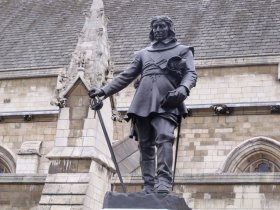 Oliver Cromwell, that great East Anglian, died 363 years ago today.
To many, he was the hero of the English civil war. Thanks to his tenacity, the tyrant Charles I was defeated. Continental-style absolutism was overthrown. The rights of free born Englishmen and women safeguarded.
To others, he was the butcher of Drogheda. A military dictator who savagely crushed those proto libertarians, the Levellers, at Burford church, and in doing so set back the cause of English liberty.
To me, Cromwell is both – and as such, perhaps suggests that we English had our revolution a century too early.
Having defeated absolutism, we had no idea with what we should replace it (as the rather overblown Putney debates rather suggest).
If only we had had our revolution after the works of Polybius had been rediscovered in those dusty archives. Revealing, as they did, the inner workings of the Roman republic, they showed us how power might be constrained. It is no coincidence that when our American cousins had their revolution a century later, they therefore created a Senate and built a Capitol on the banks of the Potomac.
In Cromwell's time, we had no such example to guide us. So we lapsed back into despotism. Until of course, in 1688 we hit upon the idea of restraining the monarchy by putting a Dutch variety on the throne. Which worked. Sort of.
Perhaps if the works of Polybius had been rediscovered before the civil war we might now have a consul or two in Downing Street instead. And more constraints on sofa government. Or may be not.
Anyhow, spare a thought for Cromwell today. Hero or tyrannt, I hope you will agree that we still need to find better ways of holding those with power to account.
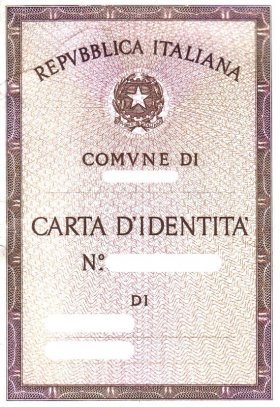
Passport to Britain? Once issued with one of these, a migrant can come into our country
 Imagine that you are the government of Hungary. Or the head of a municipal authority in Italy.
Tens of thousands of migrants have just turned up in your jurisdiction over the past few weeks, and you haven't the resources to cope. At the same time, the migrants that you are struggling to feed and house don't really want to be there anyhow. Most are keen to press on north, into Germany, Scandinavia or the UK.
At first, perhaps you turn a blind eye if any of them clamber aboard a train heading north. Or maybe you issue a rail warrant to encourage them on their way.
How long before you do something more drastic and begin to issue migrants with official documentation that will allow them to travel freely across Europe?
The debate about how many asylum seekers we should accept from Syria is a side show. Last year, 636,000 people came into Britain. A mere 12,000 people were offered asylum.
The real issue is how many of the hundreds of thousands of migrants coming into Europe will get the right to come to Britain. So long as we remain in the EU, they will all eventually have the right to come.
Rather than focusing on the 5,000 migrants camped around Calais, we should be thinking about the 800,000 migrants who have just arrived in Germany. As soon as they get official status in Germany, they will have the right to come to Britain – and there is nothing David Cameron can do to prevent it.
As long as we remain in the EU, our borders are not controlled by British officials at Heathrow, Harwich or Calais. The ability to cross our borders is today in the hands of any official in any EU memberstate minded to issue a migrant with an ID card or passport.
At the moment, EU nationals can travel to Britain with just an ID card. These ID cards, with which one can enter the UK, are issued in many EU countries by local municipal authorities. What is to stop some local authorities in Italy or elsewhere issuing ID cards as a way of getting migrants to move on?
I suspect it is only a matter of time before this happens.
From monetary policy to migration policy, the EU seems to export public policy failure from one member state to the next. We need to leave.
Where is the serious thinking in government?
It was one of those watershed moments. Rev Paul Flowers, chairman of the Co-operative Bank, was asked by the chairman of a Commons committee if he knew the total asset value of the Co-operative Bank.
About £3 billion, he ventured. In fact, the total asset value of the bank over which he presided was £47 billion.
Before that moment, you would have been forgiven for assuming that those who sit on the boards of the big banks knew what they were doing. Afterwards, it was obvious that corporate governance was not merely a problem at the Co-Op bank.
Far from being wise and competent, what if City board rooms were full of people who looked and dressed the part, but thought and talked in clueless cliché? Those we once assumed to be capable and competent started to seem anything but.
I wonder if we will have a similarly revealing moment in politics, too.
Just like with banking, we take it for granted that those at the top in Westminster know what they are doing and why they are doing it. They are, after all, at the top. It is their job to think hard about public policy. So they must have done so, right?
A couple of days ago, the Times wrote about a new book, Inside the Nudge Unit. It is the story of the Whitehall behavioural insights team. Housed in the heart of government, this team has been able to improve the way we are governed. One of its big successes, the Times told us excitedly, has been to change the wording on letters sent out with tax returns. This has improved the rate of returns by several percentage points, apparently.
Great. But where is the new thinking about the big picture issues? Where is the unit in Downing Street thinking about how we might respond to the mass mass movement of people across the Mediterranean? What, besides more fences for Calais, do ministers propose we actually do?
Like the Co-Op board, government seems to have detailed policies on issues of relatively minor significance, but little grip on some fundamentals.
The economy is growing again. The politicos who preside over us are keen that we should thank them for it. Yet, just as we have done for decades, the increase in output is largely driven by consumption. It is a rise in output conjured up with cheap credit. We continue to live beyond our means by issuing IOUs.
Several years after the banking bubble burst, who in government is giving serious thought to monetary alternatives and real bank reform? Ministers are keen to dress in hard hats, but are they prepared to ask the kind of questions that will need answering if we are to actually rebalance the economy?
Corporate governance means scrutinising those who run things. Just as a bank needs good corporate governance, so does a country.
If the chairman of the bank does not know the total asset value of the business, why even talk about banking ethics? If ministers cannot control our borders, why are they worrying about being able to control sea levels?
The business of government has become too big and bloated. Government needs to de-clutter. Ministers need to understand the core business of government.
Giving an additional £3 million to embattled charity, Kids Company, would not help "deliver the outcomes for which the department is funded by Parliament", the head of the Cabinet Office warned ministers recently. It did not stop them handing out the money.
Perhaps ministers need a far sharper sense of the outcomes government is there to achieve – and then some grown up thinking about how to achieve them.
800,000 migrants arrive in Germany
 Germany, we were often told, is losing people. The birth rate is so low, according to the experts, that there will be many fewer Germans in the decades ahead.
Early this year, a report by the World Economy Institute projected that the population of Germany will fall from 81 million today down to 67 million by 2060. Others talked about there being eight million fewer Germans by 2050. An official think tank produced proposals about managing demographic decline.
That was all before the summer.
Now we learn that almost 800,000 migrants are expected to arrived in Germany this year alone. Those reports that were just a few months ago talking about 100,000 new arrivals each year are looking a little redundant.
It could be that this year is a one off. An exceptional year for migration. Demographic projections are notoriously unreliable. Alternatively, this scale of migration might turn out to be a new normal. We cannot be sure.
I suspect that in 2050 – and indeed 2060 – there will be more people living in Germany than there are today, despite what the expert think tanks once told us.

 RSS Feed
The End of Politics and the Birth of iDemocracy
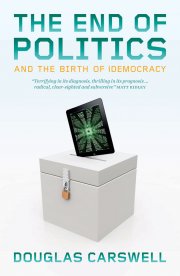
"A revolutionary text ... right up there with the Communist manifesto" - Dominic Lawson, Sunday Times
Printed and promoted by Chris Lowe on behalf of Douglas Carswell, both of 105 Station Road, Clacton-on-Sea, Essex
